
ReStock'd: Cut Duplicates, Reduce Waste, and Shop Faster
# ReStock'd: Cut Duplicates, Reduce Waste, and Shop Faster
Most households waste money in the same three ways: buying duplicates of what's already in the pantry, tossing food that expired quietly in the back of the fridge, and wandering the store without a list that reflects reality at home. ReStock'd is the first consumer tool I've seen that tackles all three problems with the right level of simplicity.
If you read our earlier post about Restock Day-the weekly reset where you take five minutes to update what's in your kitchen-consider this the next step. Restock Day is the habit. ReStock'd is the system that makes the habit stick, week after week, without turning it into a chore.
## Why duplicates and waste happen (and how ReStock'd fixes it)
Duplicate buys aren't a mystery. They're an information problem. One person thinks you're out of olive oil, so they buy another bottle. Meanwhile, the half-full one on the second shelf gets pushed back two rows, and two weeks later you're decanting into a third container like a restaurant. The same pattern drives wasted produce and mystery leftovers.
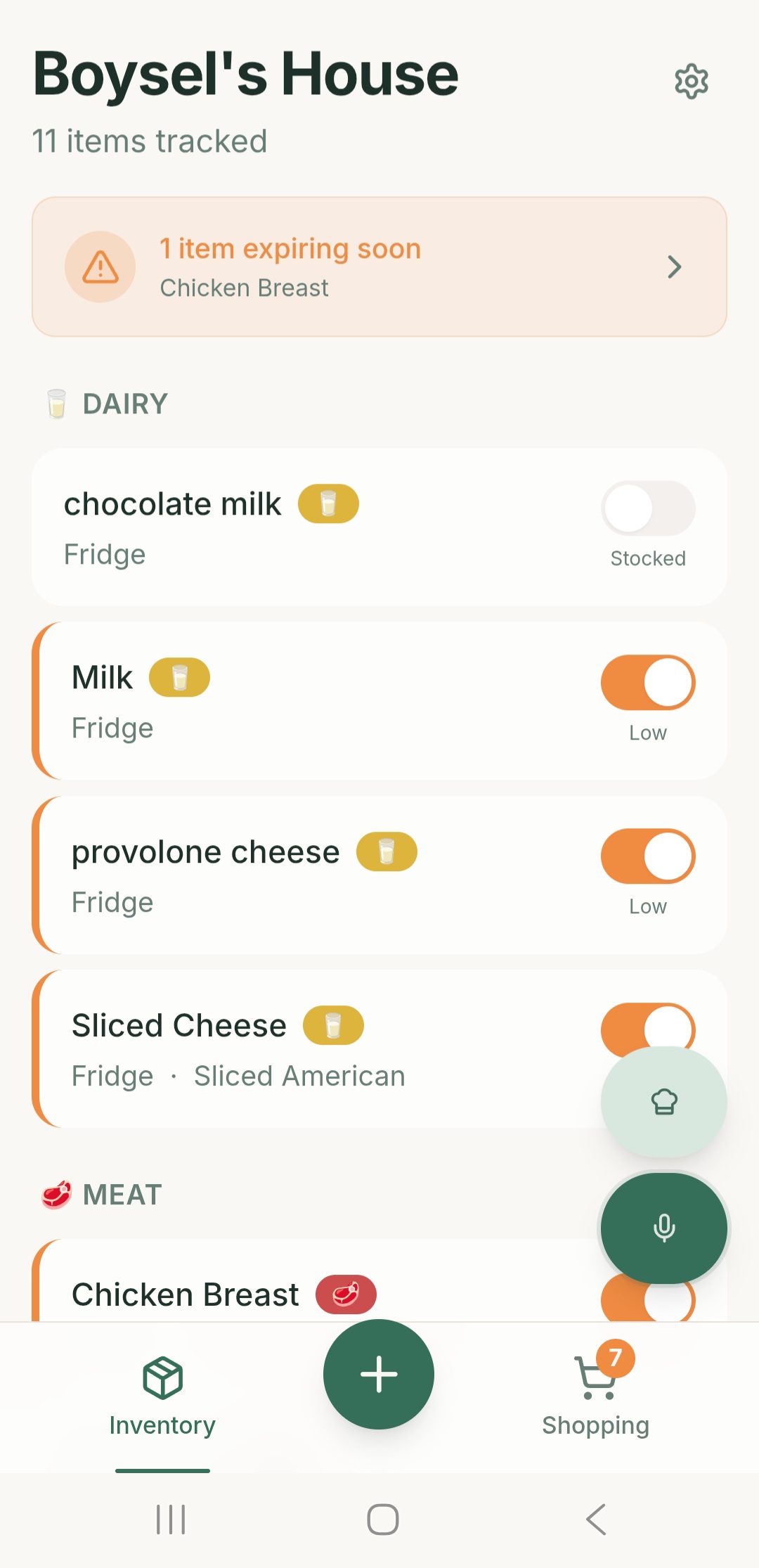
ReStock'd gives the household a single source of truth for the fridge, freezer, and pantry. You can add items fast after a grocery run, mark what's running low, and keep everything current in minutes-not hours. From there, the app does the quiet work that matters:
- Expiration alerts so you catch food before it's wasted. - Auto-generated shopping lists that reflect what you actually need. - Household sharing (up to 8 people on one account) so everyone sees the same list. - Voice commands for hands-free updates while you cook. - Recipe suggestions based on what you already have, not some aspirational list.
The result is a tighter loop: stock, use, restock-without the waste and second-guessing that costs money.
## Fast capture, accurate inventory
The only inventory system that works at home is the one you'll keep using. ReStock'd is built for speed. Open the live web app on your phone, add new items to fridge, freezer, or pantry, and you're done. The interface keeps the friction low and the cognitive load lower.
A few details we like for real-world use:
- It treats storage zones separately. That mirrors how people actually search kitchens and prevents buried items from going missing in the freezer. - Expiration alerts are part of the core workflow. When something is close to expiring, you'll know in time to use it or plan around it. - Voice commands reduce "I'll do it later" inertia. If you can say it out loud, you can keep the list accurate without stopping what you're doing. - Household sharing makes the list a shared responsibility, not one person's mental burden.
Accuracy drives value here. When the source of truth reflects reality, every downstream feature (lists, recipes, and planning) compounds the benefit.
## Smarter lists, faster trips
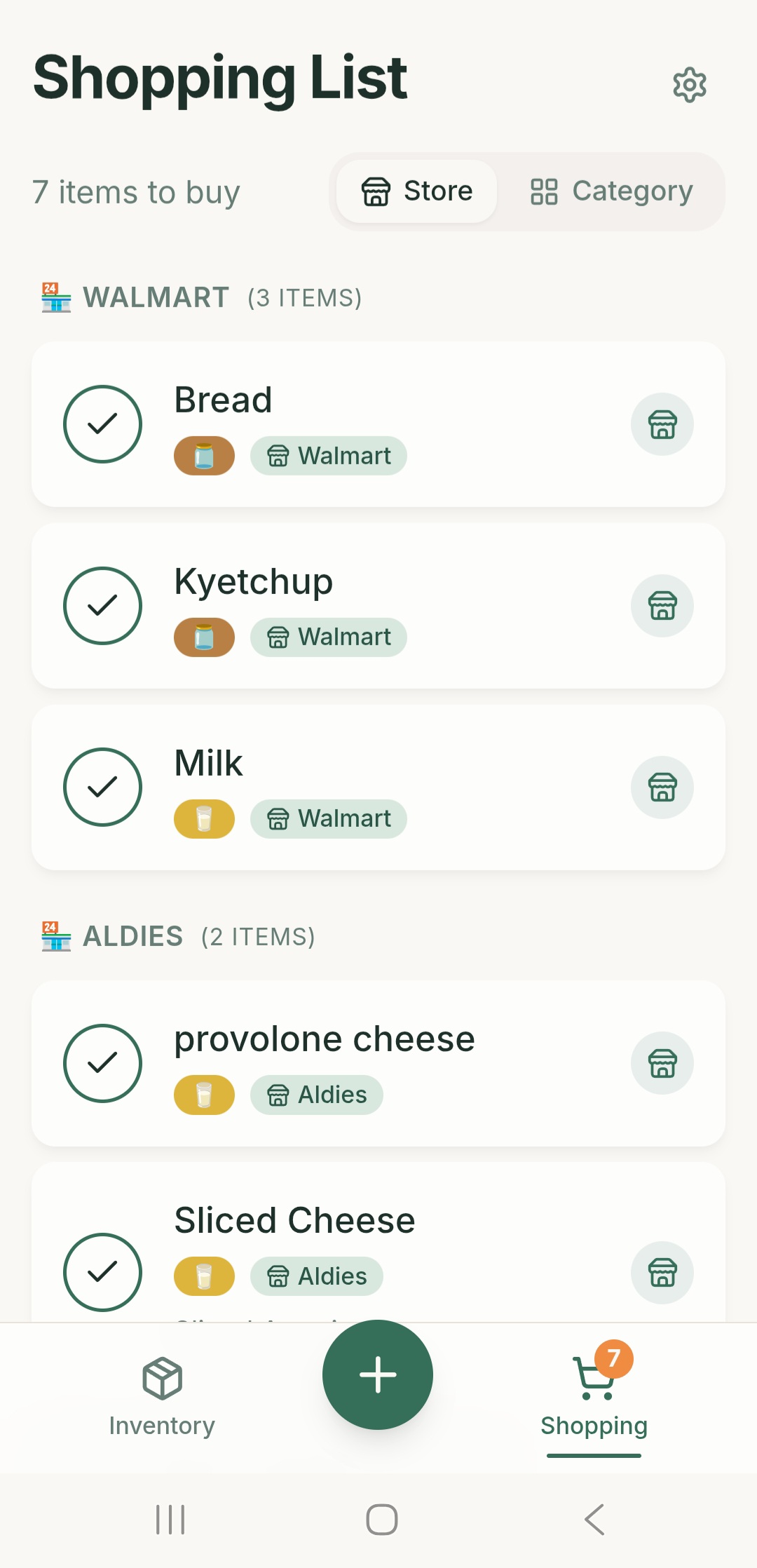
A shopping list is only as good as the inventory behind it. With ReStock'd, lists auto-generate when items run low. That shifts you from "what do we need?" to "what's already queued?" before you head to the store.
Two small but meaningful features streamline the trip:
- Store preferences let you tie items to specific retailers, which cuts aisle wandering and simplifies multi-store runs. - A clean, ad-free list view keeps focus on execution. You're there to shop, not swipe past distractions.
In practice, this turns grocery runs into an execution task, not a planning session in the parking lot. For teams like ours, anything that shortens execution time and reduces context switching is a win.
## Plan from what you already have
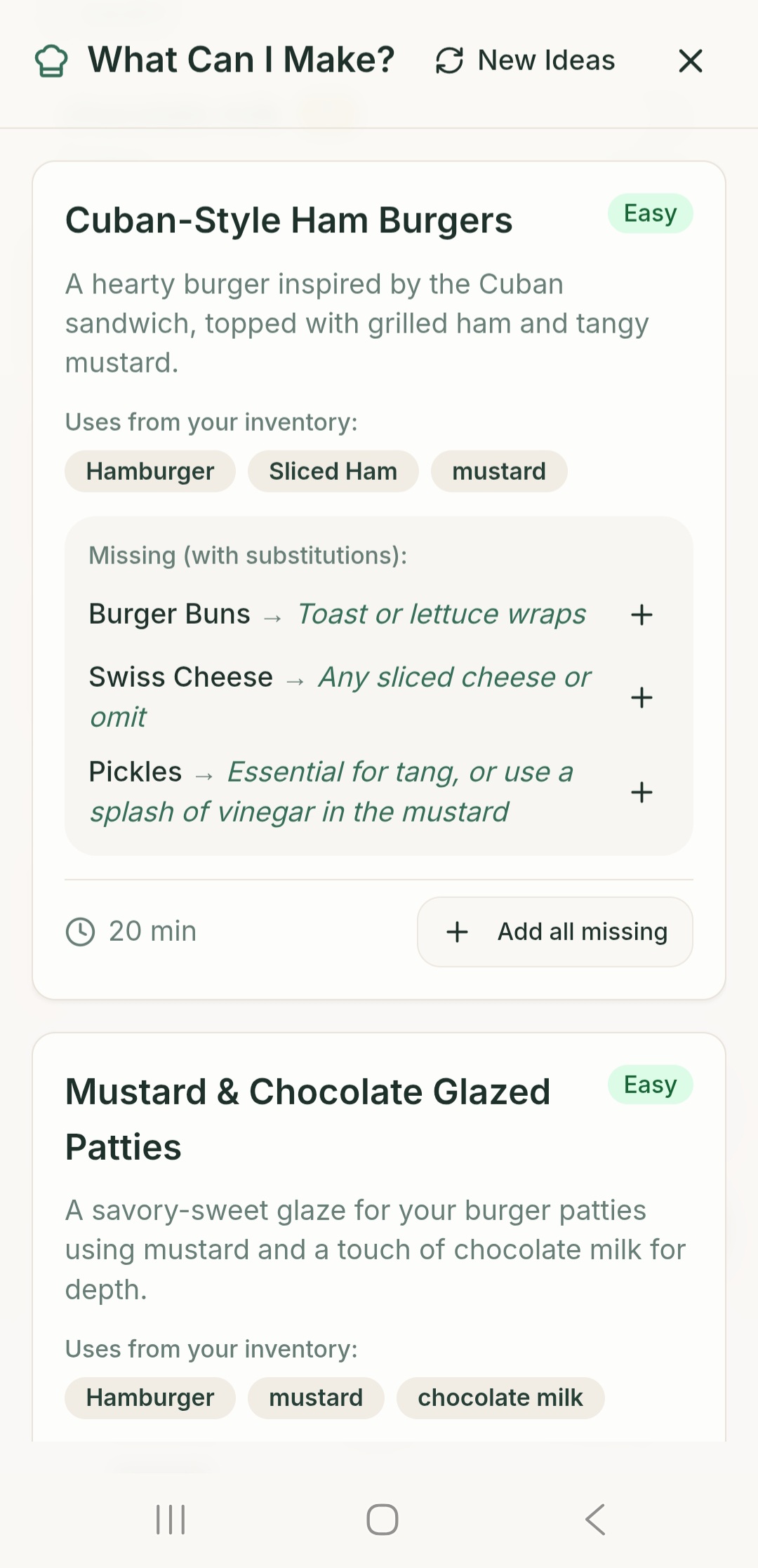
Meal planning works best when it starts with the inventory, not a blank page. ReStock'd's recipe suggestions feature looks at what's already in your kitchen and surfaces meals you can make right now. That's the unlock: you're not doom-scrolling recipes that require three specialty ingredients you don't own.
This workflow is simple and powerful:
1. Update inventory after a grocery run. 2. Skim expiration alerts to prioritize near-term ingredients. 3. Use recipe suggestions to assemble meals that use what you've already paid for.
Do that consistently and you reduce both waste and last-minute delivery orders. It's the same operational logic we use in business-match demand to on-hand supply-applied to the kitchen, with much better optics for your weekly budget.
## Household coordination without the overhead
Most kitchen chaos is a coordination problem. One person shops, another cooks, and a third makes a heroic snack at midnight. ReStock'd centralizes the signal so every person has the same view of what's in stock and what's next. Up to 8 household members can share one account, which is plenty for families, roommates, or even a small team managing a shared office kitchen.
Because the app runs as a live web app today, you can install it on any device and add it to the home screen for an app-like feel. That keeps adoption high without waiting for app store approvals. iOS and Android apps are on the way, but there's no reason to wait to get the system in place.
## Put it to work before your next grocery run
If you're already running a Restock Day routine, this will feel familiar-and faster. If you're not, start small:
- Create your ReStock'd account and set up your household. Invite the people who shop or cook. - Add the items you just bought and the staples you always keep on hand. - Glance at upcoming expiration alerts and plan one meal that uses something time-sensitive. - Before your next trip, check the auto-generated list and clear out anything you already replaced.
As of May 2026, founder launch pricing is available for early members. The public pricing on the site lists $4.99/month or $39.99/year (a 33% annual discount), with a limited-time founder offer of $24.99 for the first year. If you know you're going to use this, locking that in now is the obvious move.
Here's the call to action: try the live web app, get your first inventory pass done in under 15 minutes, and walk into your next store visit with confidence. You'll buy what you actually need, skip what you don't, and cook from what you already have.
## What this looks like in practice (the operator's view)
For business owners and teams, the mental model here is familiar. You can think of ReStock'd as lightweight inventory with:
- Real-time visibility (shared lists and current counts). - Demand shaping (recipe suggestions nudging you to use on-hand supply). - Loss prevention (expiration alerts and duplicate-bust lists). - Route optimization (store preferences that group the right items in the right place).
The upside is cumulative. A few dollars saved on duplicates each week, fewer emergency takeout nights, and a 20-minute faster grocery run add up over a quarter. More importantly, it reduces the background noise of "do we have this?" that burns decision-making energy you could use elsewhere.
## Final thought
Tools that stick are simple, specific, and practical. ReStock'd checks those boxes. It helps normal households make better decisions with less effort-and it does it with features that map to how kitchens actually run. If you've been meaning to get a system in place, this is your moment: start the web app, share it with your household, and lock in founder pricing while it's still live.
Try ReStock'd before your next grocery run and let the results compound.
## Sources
- [ReStock'd Website](https://restockid.com/) - [ReStock'd Web App](https://app.restockid.com/)